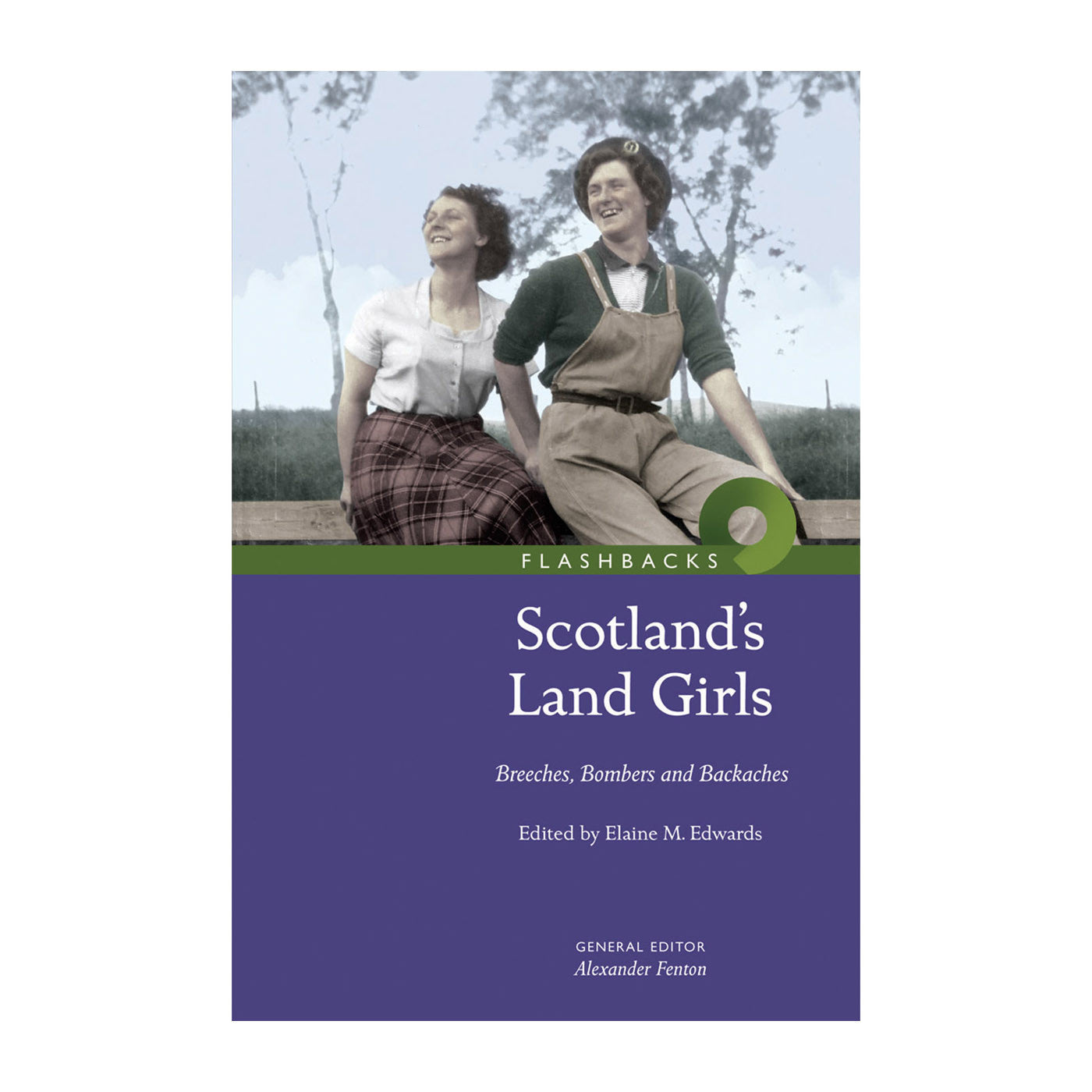
Scotland's Land Girls: Breeches, Bombers and Backaches
Scotland's Land Girls: Breeches, Bombers and Backaches
Couldn't load pickup availability
Delivery Information
Delivery Information
General Information:
The cost of postage and packaging is calculated based on the total weight of your order and the shipping destination. Please see our delivery charges below for more information.
Orders will be sent by Royal Mail 2nd Class Signed for, Parcelforce or other courier, based upon the items ordered and the shipping destination. We endeavour to select the shipping method that ensures an efficient and cost effective delivery.
Orders exceeding 1kg will normally be sent by courier and international orders below 1kg will be sent by Airmail.
Customers will receive a confirmation email/text message once the item is shipped.
If you have any special delivery requirements, or any further questions regarding the information above, please contact us to discuss arrangements and any additional costs prior to placing your order.
Email: shoponline@nms.ac.uk
Click and Collect
Our click and collect service is free of charge. Select "Collect from the Museum" at the shipping stage of online checkout to use this service.
Customers will receive two emails; one confirming the order and one confirming that the order is ready for collection. Please collect your order from the selected collection point only once you have received the second email confirming your order is ready for collection. Orders will be processed and ready for collection within 1-2 days.
Customers may collect their orders within the Shop's opening hours;
Mon-Sun: 10am-5pm
Please note click and collect orders will be held for two weeks before being refunded.
Shipping to the US
All orders to the US include duties and tariffs costs, which will show at checkout when finalising your order.
Shipping to the EU
Due to General Product Safety Regulation (GPSR) regulations we are currently not shipping to the EU.